


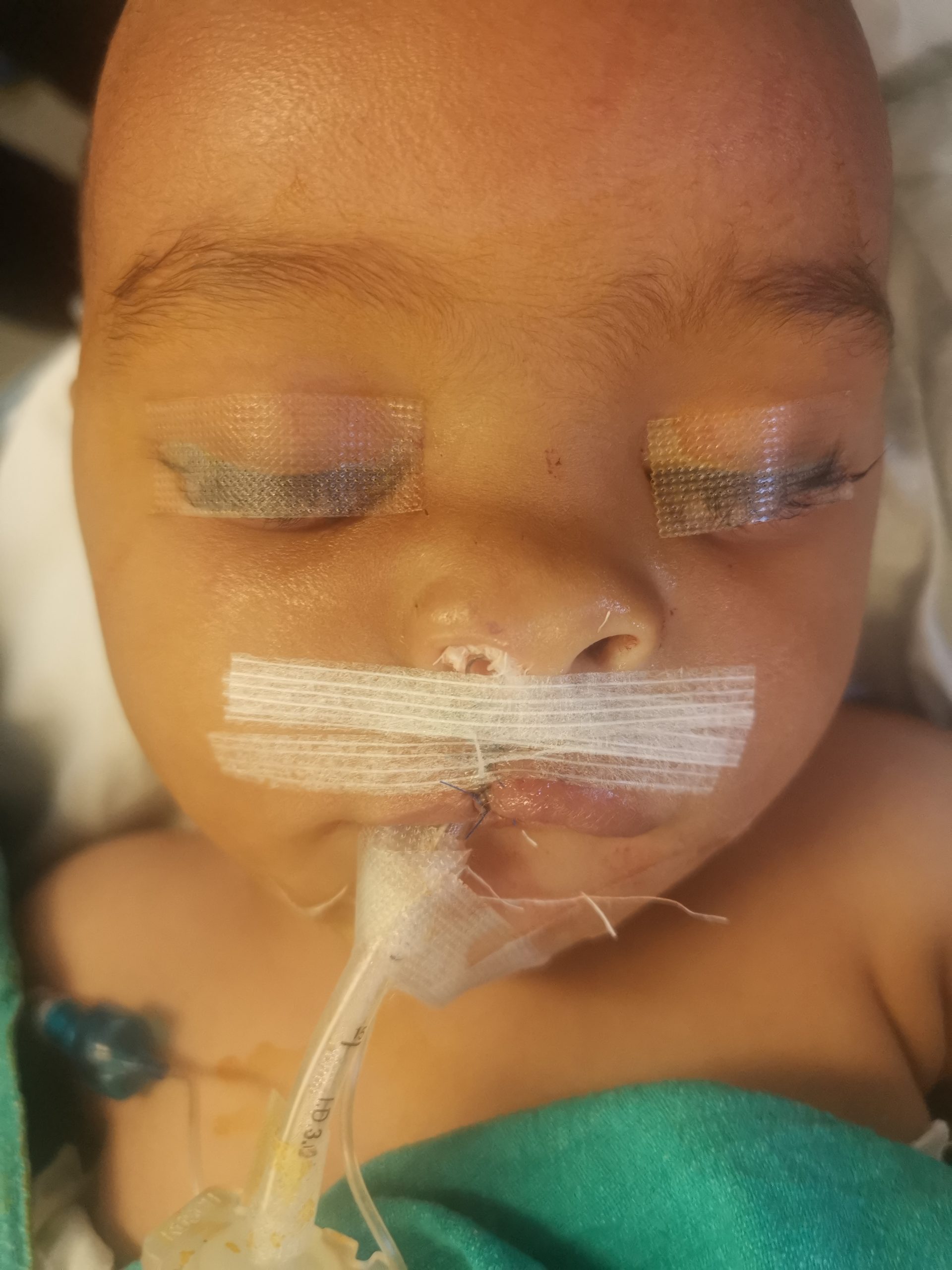
Cleft lip and palate is one of the most common congenital malformations. Worldwide, it is estimated that there is an average of one case per 500 to 600 births. A cleft lip, jaw, or palate must always be operated on, usually within the first few months of life. If the condition remains untreated and children grow up without therapy, they become outsiders in their environment. Unfortunately, this is often the case in developing countries, as there is a lack of specialists capable of performing these complex operations.
Patients always suffer in two ways: on the one hand, they bear an aesthetic flaw on their face and often live in social isolation because of their difference. At least as serious are the functional disorders associated with this malformation. Swallowing and breathing are impaired, as are early sound formation and language development. Chronic middle ear infections and associated hearing deficits further complicate the process of learning to speak. In babies, the disturbances in breathing and food intake can ultimately become life-threatening, as they are often malnourished or undernourished and thus susceptible to infections.
read more
Usually together with the ENT team, an expert in oral, maxillofacial, and plastic facial surgery travels to Eritrea twice a year for ARCHEMED to treat patients with facial clefts. Particularly difficult and complex cases are assigned to him; he can operate on up to four children per day. These children and their families are given new perspectives and the chance for a life of health and dignity.
Project Management
Prof. Dr. Dr. Joachim Zöller, Oral and Maxillofacial Surgeon, Cologne